Empathy, Ambiguity and Zen-Inspired Innovation
There’s a famous Zen fable about a scholar who visits a Zen master to learn about enlightenment. The master serves tea but keeps pouring even after the cup is full. Tea spills over the rim and onto the table. The visiting scholar exclaims, “Stop! The cup is full; it can’t hold any more!” The master replies, “Like this cup, you are full of your own ideas and preconceptions. How can I teach you unless you first empty your cup?”
This simple yet profound story teaches a lesson in humility and openness, a lesson critical not only in Zen but also in innovation and creative problem-solving. As innovators, designers, and leaders, we often come to the table with cups full of assumptions, biases, judgments and rigid definitions. Let’s admit it. Our brains are judgment machines. This is how our brains are wired! Someone walks into the room and five judgments spring into our mind about them. Quick judgment helped our ancestors survive: is that animal approaching us predator or prey? Is that shiny berry food or poison? It is what it is. We are who we are. But being aware of our flaws may help us manage them. Because to truly innovate, we must first empty our cups, be prepared to abandon our assumptions and float into the unfamiliar domain of ambiguity.
Someone walks into the room and 5 judgments spring into our minds! Our brains are judgment machines!
Why Embracing Ambiguity is Essential for Innovation
The traditional education system emphasizes precision and finding the one “right” answer. This approach is valuable in certain domains but becomes a roadblock when we venture into the realm of innovation, where ambiguity reigns.
In the early stages of design thinking, embracing ambiguity is not just helpful, it’s necessary. Here’s why:
- Innovation Requires Exploring the Unknown Innovation is like stepping into a dark forest with only a small flashlight. You start with limited knowledge and gradually map out the terrain as you gather information. Insisting on clarity and exactness from the start prevents us from learning, stifles creativity and limits our ability to discover new possibilities.
- Humans are Complex Understanding people, whether users, clients, or even ourselves, is never straightforward. True empathy begins with humility: recognizing that we don’t have all the answers and may never fully grasp the whole picture.
- A Full Cup Prevents Listening A cup already full cannot receive more. Similarly, when we approach conversations or problems with preconceived notions, we block new insights. Even if we appear to listen, we’re often just waiting for our turn to speak or imposing our assumptions onto the situation. Imagine visiting a doctor who interrupts you mid-sentence and says, “I’ve seen this before—here’s your prescription.” While their experience is valuable, the inability to listen makes it useless. True expertise lies in creating space to receive information, ask insightful questions that are inspired by what we have just listened to, and respond thoughtfully. Without listening, there can be no empathy. And without empathy, we can never understand, let alone solve, users' problems.
It is problematic to add content to a cup that is already full. A mind full of assumptions and judgments will clash with new content.
The Power of an Empty Cup
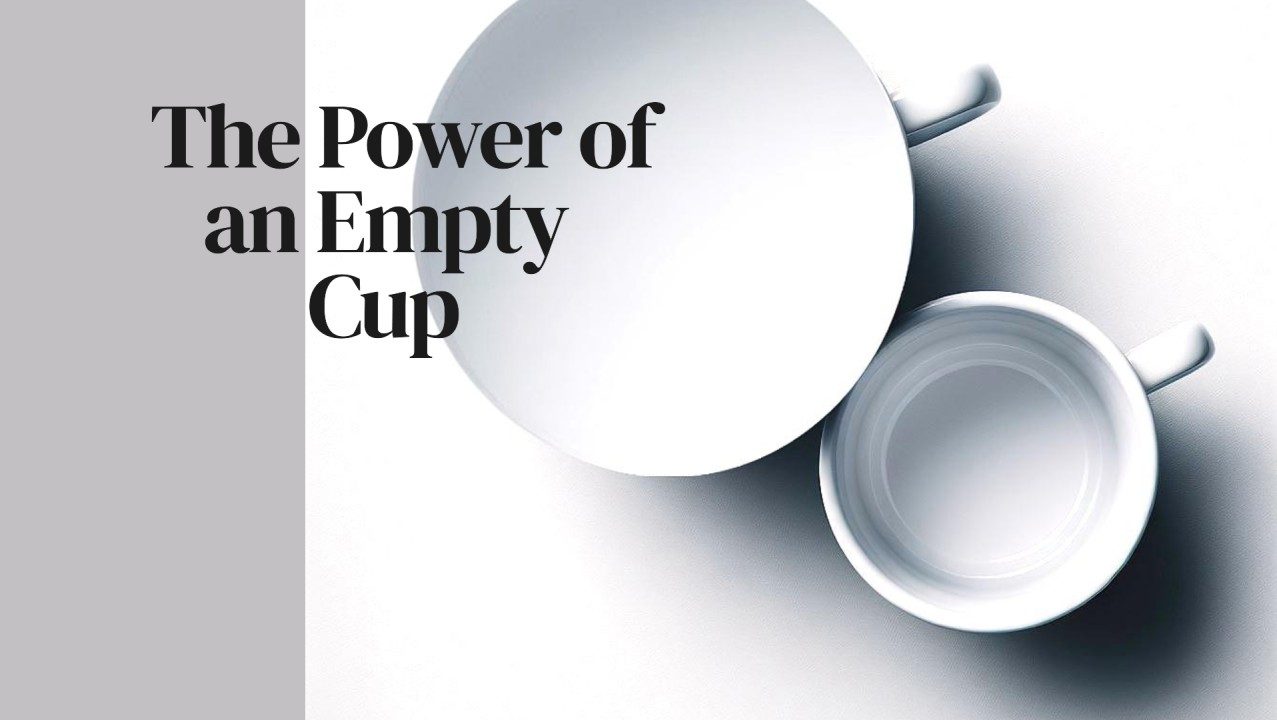
The true value of a cup lies in its emptiness, its capacity to receive and embrace new content foreign to it. Imagine buying a cup that is solid and has no space to receive your favorite drink, like the one featured at the top of the article. What would you use it for? In design thinking, an “empty cup” mindset helps us engage with users and problems without preconceptions. Here’s how this principle translates into practice:
- Purge Preconceptions One should clear one’s mind before engaging in the empathy process. While it’s impossible to completely empty our mental cup, being aware of our own biases and gently setting them aside creates more space for listening and learning.
- Listen Without Judging Approach users with genuine curiosity, openness and a belief that we don’t know. Avoid interrupting or jumping to conclusions. Instead of imposing your assumptions, ask questions that invite deeper insights. For example: “Can you tell me more about why this is important to you?”
- Observe the Unspoken Pay attention to body language, non-verbal cues, hesitation, and what’s left unsaid. Often, the most valuable insights lie between the lines. Encouraging a safe space for dialogue can help uncover these hidden truths.
- Embrace Creative Exploration Use creative tools like storytelling, role-playing, collage, sentence-completion, captioning images and other creative and visual activities to help users express themselves. These methods not only reveal their thoughts and feelings but also make it easier for us to receive and interpret their input.
Practical Tools for Embracing the Empty Cup
Implementing the “empty cup” mindset in real-world innovation requires tools and practices to foster humility, curiosity, and openness. Here are a few to consider:
- Meditation: Spend a few moments clearing your mind before starting a project or user interview. This practice helps you become aware of the assumptions you’re carrying and set them aside.
- Asking Open-Ended Questions: Replace judgment-laden questions with genuine curiosity. For example, instead of asking, “Why don’t you use this feature?” try, “What challenges are you facing with this product?”
- Creative Exercises: Engage users in activities like collaging, caption writing, or storytelling to help them articulate their needs and desires in nontraditional ways. Creativity fosters openness on both sides, enabling deeper insights.
- Observing Nonverbal Cues: Look for patterns in body language, tone, or incomplete thoughts. These can reveal underlying feelings or concerns that might otherwise go unnoticed.
The “empty cup” mindset is not about discarding expertise but leveraging it in a way that prioritizes listening, empathy, learning, and humility. A skilled professional, like an experienced doctor or designer, uses their knowledge to create better questions, interpret patterns, and remain open to new possibilities.
As innovators, we must resist the urge to fill our cups prematurely with assumptions and solutions. Instead, let us embrace the ambiguity of the unknown and create the space needed for genuine discovery. The next time you’re faced with a challenge, ask yourself: Is my cup truly empty and ready to receive?